
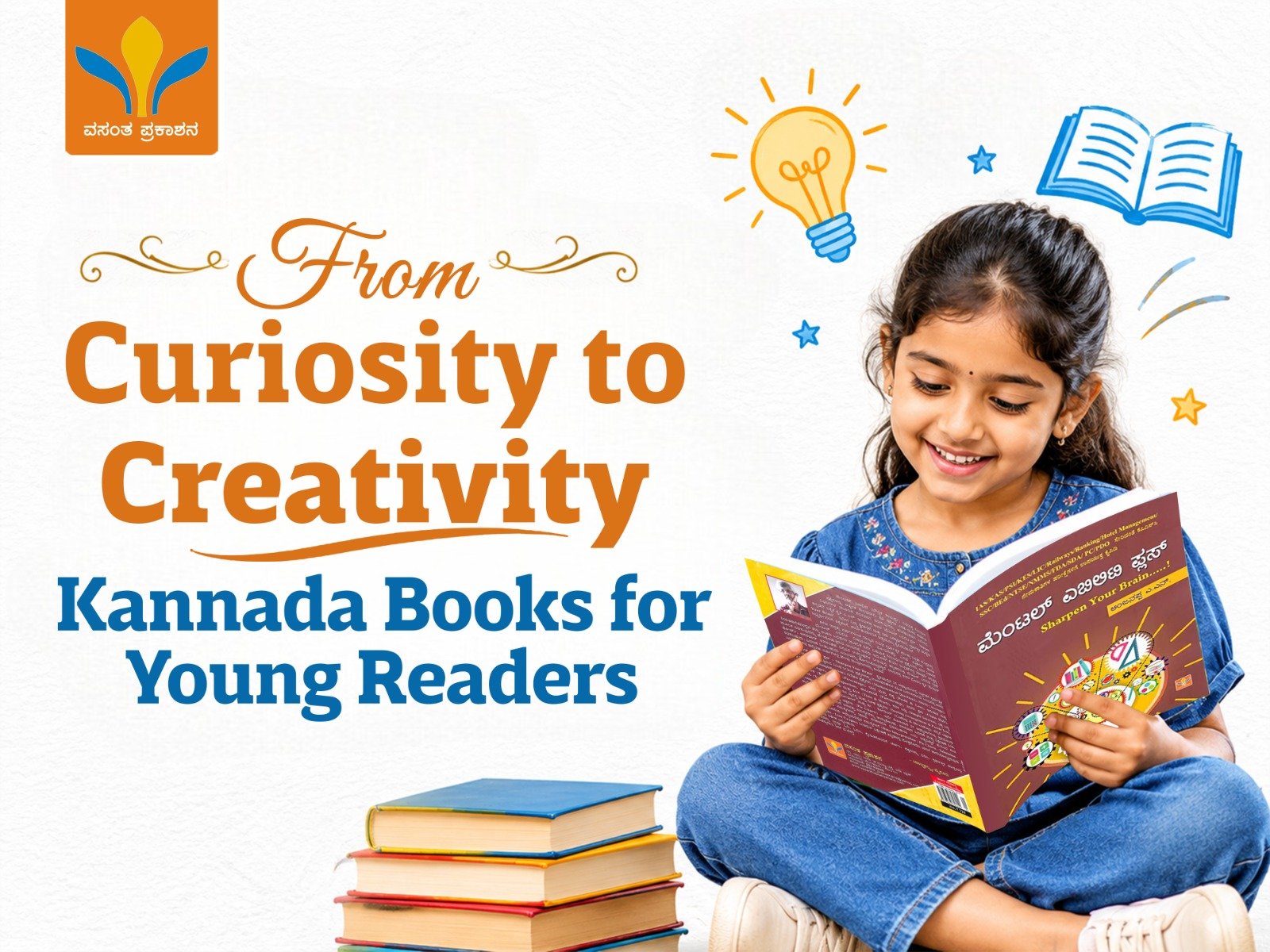
A child’s imagination often begins with a simple question. Why does the moon change its shape? How did a particular festival begin? What happens next in a story? These little moments of curiosity can become the starting point of a lifelong interest in learning and creativity.
Books give children a space to explore these questions at their own pace. They introduce new characters, unfamiliar places, exciting ideas, and experiences beyond everyday life. When children read in Kannada, they also become more familiar with the language, its expressions, and the stories connected to their surroundings.
Choosing the right books can make reading an enjoyable part of childhood.
For young readers, an interesting story can be the easiest way to develop a reading habit. Colourful illustrations, relatable characters, simple sentences, and engaging plots encourage children to continue reading.
Stories also allow children to imagine different situations and understand how characters respond to challenges. They can experience friendship, kindness, courage, patience, and other everyday values through the events in a story.
Parents looking for Kannada kids books can begin with short stories that match their child’s age and reading ability.
Children naturally enjoy exploring possibilities. A story about an imaginary kingdom, a talking animal, or an unexpected adventure can encourage them to think beyond familiar surroundings.
Reading gives children the freedom to create their own mental pictures of characters and places. They may imagine a different ending, invent a new character, or tell the same story in their own words.
These small activities encourage creative thinking and help children express their ideas with confidence.
Books can make learning more approachable when information is presented in a simple and engaging format.
Kids educational books can introduce children to subjects such as numbers, letters, general knowledge, nature, science, and everyday activities. Activity-based books may also include exercises, matching tasks, puzzles, and writing practice.
For children learning Kannada, a Kannada children’s workbook can offer opportunities to practise letters, recognise words, improve handwriting, and become more comfortable with reading and writing.
The key is to select material that supports the child’s learning stage without making reading feel like another classroom assignment.
Stories connected to local traditions can help children become familiar with their cultural background. Folk tales, traditional narratives, and mythology introduce characters, customs, and ideas that have been shared across generations.
A suitable Kannada children’s mythology book can introduce young readers to traditional stories through simple language and age-appropriate presentation.
Parents can make these reading experiences more meaningful by discussing the characters, explaining unfamiliar words, and encouraging children to share what they understood.
Regular reading exposes children to new words, sentence patterns, and different ways of expressing thoughts.
When children read Kannada stories, they become familiar with vocabulary and gradually develop better reading confidence. Reading aloud can also help them practise pronunciation and improve their ability to communicate.
Parents can support this process by asking children to describe a favourite character, retell a story, or explain what they found interesting.
These simple conversations turn reading into an interactive experience.
Children are more likely to enjoy books when reading is introduced without pressure. A comfortable routine can make a difference.
Here are a few practical ways to encourage young readers:
Parents can also explore kids books online to discover different reading options and find books suited to their children’s interests.
A child’s reading interests change with age and experience. A picture book that captures a toddler’s attention may later be replaced by longer stories, adventure narratives, educational material, and novels.
When selecting books, consider the child’s reading level, interests, illustrations, language difficulty, and subject matter.
A balanced collection can include entertaining stories, language-learning resources, traditional narratives, and books that introduce new ideas.
The aim is not to make children read more pages, but to help them discover something enjoyable and meaningful in every reading experience.
Every book introduces children to a new thought, a different perspective, or an imaginative world. Encouraging them to explore Kannada stories from an early age can help build familiarity with the language while making reading an enjoyable habit.
Vasantha Prakashana brings readers closer to Kannada literature through books that offer opportunities to explore stories, knowledge, and creativity.
Make reading an exciting part of your child’s journey. Explore Kannada books with Vasantha Prakashana and introduce young minds to the joy of discovering new stories.